Free success investment business vector

Do you ever feel like your technology setup grew without you really noticing? One day you had a laptop and a few software licenses, and now you’re juggling dozens of tools, some of which you don’t even remember signing up for. A recent SaaS management index found that small businesses with under 500 employees use, on average, 172 cloud-based apps. And many don’t have a formal IT department to keep it all straight.That’s a lot of moving parts. Without a plan, it’s easy for those parts to work against each other. Systems don’t talk, people improvise workarounds, and money gets spent in ways that don’t actually help the business grow. That’s where an IT roadmap comes in.Why a Small Business IT Roadmap Is No Longer OptionalA few years back, most owners thought of IT as background support, quietly keeping the lights on. Today it’s front-and-center in sales, service, marketing, and even


Free Colleagues celebrate success with a fist bump over financial charts depicting teamwork and unity. Stock Photo

Picture someone in the middle of a presentation, with the room (or Zoom) fully engaged, when their laptop freezes. You can almost hear the collective groan. That tension sticks, and if it happens often, it doesn’t just derail a meeting. It chips away at how people feel about their jobs.That’s why IT isn’t just about servers, software, or “keeping the lights on” anymore. It’s about the day-to-day experience employees have every time they log in, click a link, or try to share a file. When those moments are smooth, morale lifts. When they’re not, it shows, both in productivity and in retention.The numbers are telling. Deloitte found that organizations with robust digital employee experiences see a 22% jump in engagement, and their people are four times more likely to stay. Similarly, Gallup shows that this higher employee engagement drives greater productivity and reduces turnover.So, the question becomes: If technology could

Free statistic survey website vector

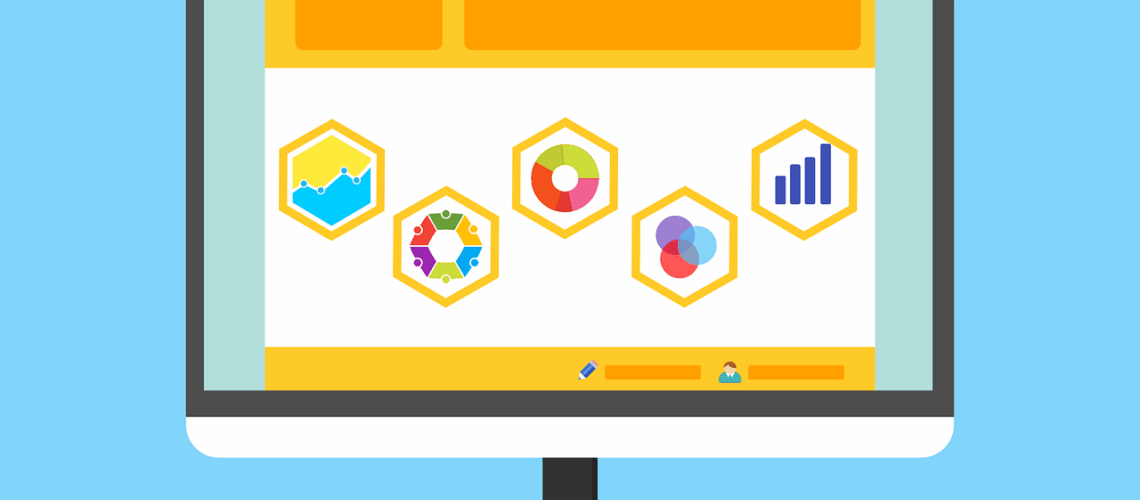
Do you ever open up a report, scroll through for a few seconds, and think, “Where do I even start?”If you run a small or midsize business, you’ve likely been there. The sales numbers are buried under marketing analytics, operational stats, and a dozen other data points you didn’t even ask for. It’s all “important” information, but somewhere between downloading the report and making a decision, your brain taps out.You’re not alone. One study found that the average person processes about 74 gigabytes of information every single day, roughly the equivalent of watching 16 movies back-to-back. No wonder it’s hard to focus on what really matters.The question is: How do you cut through the noise without ignoring the numbers entirely? The answer, for many SMBs, is surprisingly simple: Visualize it.The Challenge of Data OverloadData overload is having more information than you can process in a meaningful timeframe. In a small

Free A robotic hand reaching into a digital network on a blue background, symbolizing AI technology. Stock Photo

Walk into almost any IT department right now, and you’ll hear the same conversation at least once a week: “Have you tried that new AI tool yet? I heard it’s a game-changer.”The truth is that the market is buzzing with promise and noise. A recent McKinsey survey shows that 78% of companies now use AI in some form, and that number is climbing. Plenty of software promises to slash workloads, automate everything, and make teams ‘future-proof.’ Some deliver on that promise. Others feel rushed to market just to ride the hype. For IT businesses, knowing the difference is essential to staying relevant.Why AI Feels Different This TimeAI, of course, isn’t new. However, something has shifted over the last two years. Models have become better at understanding context, generating original content, and even juggling multiple formats at once.Under the hood, the big three technologies driving this shift are:Machine Learning (ML): These are

Nothing disrupts your workday quite like unreliable Wi-Fi. One moment everything’s running smoothly, and the next, video calls freeze, files won’t upload, and the team struggles to meet deadlines because everything’s slowed down. Being stuck in this situation is exhausting, killing productivity, and impacting the entire business.When slowdowns start happening regularly, frustration quickly builds. But here’s the good news: most businesses don’t need to overhaul their entire system. Usually, just a few smart tweaks to your network can bring your connection back to life.You don’t need a big IT team to make a real difference. By working with the right IT partners, you can pinpoint what’s slowing down your network, make smart upgrades, and turn your slow Wi-Fi into a fast, reliable system your team can count on every day.Why Stable Connection Is Essential for Your BusinessThese days, everything we do at work depends on the internet, including:Video meetingsCloud-based appsReal-time

a desk with a laptop, keyboard, mouse and a monitor

In the past, teams relied on sticky notes and endless email threads to manage tasks. But with today’s hybrid work environments and fast-moving deadlines, that approach just doesn’t cut it anymore. Effective project management is now essential to stay on track and ahead.According to McKinsey, the average worker spends 28% of their week managing email and nearly 20% just hunting for information or colleagues to help.This article introduces Microsoft Planner, a versatile tool that’s just as effective for simple task management as it is for complex enterprise projects. It’s easy to get started with, yet powerful enough to keep multiple projects organized and on track. With a bit of guidance from an IT partner experienced in supporting small teams, Planner can transform the way you organize, collaborate, and deliver results.Teams Wasting Time on Endless Emails and Missed TasksWhen tasks are not properly organized, it’s hard to monitor your team’s progress:Team

Free internet security digital vector

Your office thermostat, conference room speaker, and smart badge reader are convenient, but they’re also doors into your network. With more devices than ever in play, keeping track can be tough, and it only takes one weak link to put your entire system at risk.That’s why smart IT solutions matter now more than ever. A trusted IT partner can help you connect smart devices safely, keep data secure, and manage your whole setup without stress.Here’s a practical guide designed for small teams getting ready to work with connected tech.What is IoT?IoT, or the Internet of Things, is all about physical devices, like sensors, appliances, gadgets, or machines, being connected to the internet. These smart tools can collect and share data, and even act on their own, all without needing someone to constantly manage them. IoT helps boost efficiency, automate tasks, and provide useful data that leads to smarter decisions for

Free A person calculating finances with a calculator and pen on a desk indoors. Stock Photo

Without realizing it, technology can drain your business budget. One day, everything seems manageable, and the next, you’re left wondering where all these unexpected costs are coming from. Expenses pile up quickly and become tough to track. Whoever said running a business would be easy?Here’s the good news: you don’t need to spend thousands on a large in-house IT team or become an IT expert yourself. The best approach is to partner with an IT specialist who can help you manage your IT costs. With their strategic planning and focus, your IT budget will work for you, not against you. This guide is designed to help you better understand IT expense planning.Strategic Ways to Plan Your Business’s IT ExpensesStep 1: Be Aware of Your Business ExpensesTake some time to figure out what you are paying for and how it will benefit you. Ask yourself:What equipment is your team using daily?How

Free Business professionals discussing financial graphs and charts in an office setting. Stock Photo

Nobody builds a house on a weak foundation, so why operate your business based on unreliable data? According to research, bad data costs US firms over $3 trillion every year, and roughly 40% of company goals fail as a result of inaccurate information.Data is everywhere, and if you are not utilizing it to your advantage, you are missing out. It is found in emails, customer profiles, inventory systems, or basically throughout your entire workflow. But relying on outdated or inaccurate information can lead to confusion, slow down your team, and ultimately cost you a lot of money.Here’s the good news: you don’t need an entire IT department to manage your data effectively. With the right IT partner and a few simple steps, you can keep everything clean and running smoothly.Why Good Data Is KeyIt is challenging to run a small business, and bad data makes things worse. With accurate data, you

Free business team employees vector

Is your team constantly reinventing the wheel? It might be time to build a smarter way to share what you already know.Every small business runs on shared knowledge. How things work, what’s been tried, and what actually delivers. But when that knowledge isn’t documented, mistakes repeat, and progress slows. Inefficient knowledge sharing impacts businesses across the board, costing large businesses an average of 47 billion annually. Smart knowledge management strategies (KMS) can help solve this problem. The right IT solutions keep your team aligned, speed things up, and stop repeat work before it starts.10 Knowledge Management Strategies for Small Businesses1. Start with the Right QuestionsBefore diving into solutions, stop and ask: What knowledge gets lost around here?You might notice that onboarding feels slow, questions keep coming up, steps get missed, or customers ask for help more than they should.Ask different departments what they need access to but can’t seem to find. These