All posts by Jose Luis

Free antivirus security privacy illustration

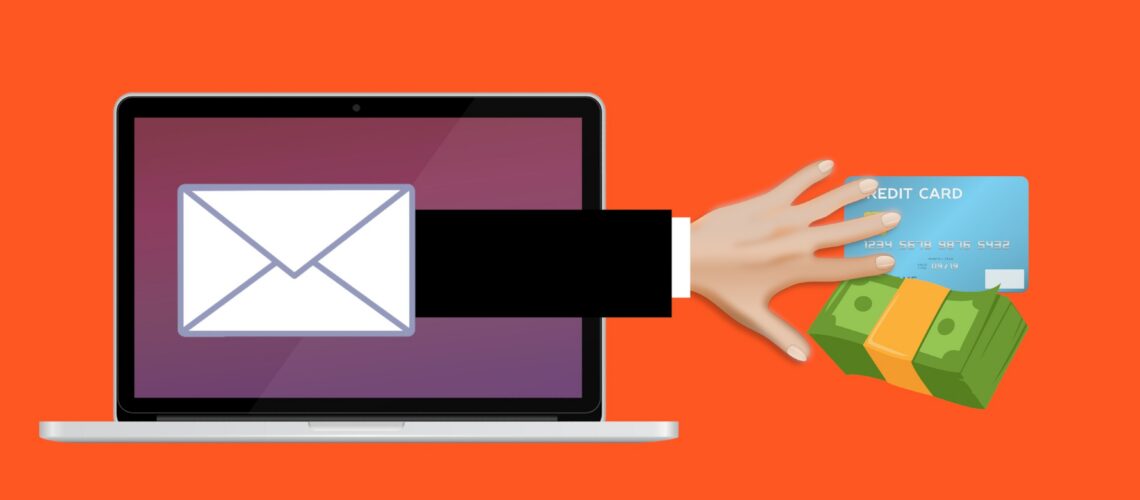
A fake recruiter message is one of the cleanest social engineering tricks around because it doesn’t look like a trick.That’s why LinkedIn recruitment scams work so well inside real businesses. They don’t arrive as malware. They arrive as a normal conversation that nudges someone toward one small action: click this link, open this file, “verify” this detail, move the chat to a different app.A few simple checks, a couple of hard-stop rules, and an easy way to report suspicious outreach can shut these scams down without slowing anyone down.LinkedIn Recruitment ScamsLinkedIn recruitment scams artfully blend into normal professional behaviour. The message doesn’t look like a “cyber attack.” It looks like networking, and it borrows credibility from recognisable brands, polished profiles, and familiar hiring language. At platform scale, the volume is also hard to wrap your head around. Rest of World reports that LinkedIn said it “identified and removed 80.6 million fake accounts” at registration

Free cyber security digital cyber illustration

In the traditional office, a “Clean Desk” policy was a simple habit: shred the sensitive stuff, lock it away, and don’t leave passwords where someone can see them.In 2026, the same idea still matters but the “desk” has changed. For many teams, the home office is now the default workspace, and that means physical access can quickly become digital access. An unlocked screen, a shared device, or a laptop left in the wrong place can expose the same systems your business runs on every day.Clean Desk 2.0 isn’t about aesthetics. It’s about securing the physical-to-digital bridge. If a houseguest, a delivery person, or a thief can sit down at your workstation, they don’t need to be a master hacker to cause real damage. They just need a few unattended minutes and an open session.Why an Unlocked Screen is a Data BreachMost small business owners treat multi-factor authentication (MFA) as the ultimate front-door

Free list notes icon illustration

At home, security incidents don’t look like dramatic movie hacks. They look like stepping away from your laptop during a delivery, or leaving it unlocked while you grab something from another room.Those ordinary moments, repeated over time, are how work devices end up exposed.A remote work security checklist focuses on simple, practical controls that hold up in real life. Put it in place once, make it routine, and you’ll prevent the kinds of issues that hurt most because they were entirely avoidable.Why Home Is a Different Security EnvironmentA work laptop doesn’t magically become “less secure” at home. But the environment around it does.In the office, there are built-in boundaries: fewer shared users, fewer casual touchpoints, and more predictable networks. At home, that same laptop is suddenly operating in a space designed for convenience, not control.For starters, physical exposure goes up.At home, devices move from room to room, sit on tables

Free cloud computer backup illustration

If you want to uncover unsanctioned cloud apps, don’t begin with a policy. Start with your browser history.The cloud environment most businesses actually use rarely matches the one shown on the IT diagram. It’s built through countless small shortcuts: a “just this once” file share, a free tool that solves one problem faster, a plug-in installed to meet a deadline, or an AI feature quietly enabled inside an app you already pay for.In the moment, none of it feels like a problem. It feels efficient. Helpful.Until it isn’t. Then you realize business data is scattered across tools you didn’t formally approve, accounts you can’t easily offboard, and sharing settings that don’t reflect the actual risk.Why Unsanctioned Cloud Apps Are a 2026 ProblemUnsanctioned cloud apps have always existed. What’s changed this year is the scale, the speed, and the fact that “cloud apps” now include AI features hiding in plain sight.Start

A combination lock rests on a computer keyboard.

Ransomware isn’t a jump scare. It’s a slow build.In many cases, it begins days, or even weeks, before encryption, with something mundane, like a login that never should have succeeded.That’s why an effective ransomware defense plan is about more than deploying anti-malware. It’s about preventing unauthorized access from gaining traction.Here’s a five-step approach you can implement across your small-business environment without turning security into a daily obstacle course.Why Ransomware Is Harder to Stop Once It StartsRansomware is rarely a single event. It’s typically a sequence: initial access, privilege escalation, lateral movement, data access, often data theft, and finally encryption once the attacker can inflict maximum damage.That’s why relying on late-stage defenses tends to get messy.Once an attacker has valid access and elevated privileges, they can move faster than most teams can investigate. Microsoft says, “In most cases attackers are no longer breaking in, they’re logging in.”By the time encryption begins,

A piece of cardboard with a keyboard appearing through it

It usually starts small. Someone uses an AI tool to refine a difficult email. Someone enables an AI add-on inside a SaaS app because it promises to save an hour a week. Someone pastes a paragraph into a chatbot to “make it sound better.”Then it becomes routine.And once it’s routine, it stops being a simple tool decision and becomes a data governance issue: what’s being shared, where it’s going, and whether you could prove what happened if something goes wrong.That’s the core of shadow AI security.The goal isn’t to block AI entirely. It’s to prevent sensitive data from being exposed in the process.Shadow AI Security in 2026Shadow AI is the unsanctioned use of AI tools without IT approval or oversight, often driven by speed and convenience. The challenge is that the “helpful shortcut” can become a blind spot when IT can’t see what’s being used, by whom, or with what

Free cyber security technology network illustration

Most small businesses aren’t breached because they have no security at all. They’re breached because a single stolen password becomes a master key to everything else.That’s the flaw in the old “castle-and-moat” model. Once someone gets past the perimeter, they can often move through the environment with far fewer restrictions than they should.And today, with cloud apps, remote work, shared links, and BYOD, the “perimeter” isn’t even a clearly defined boundary anymore.Zero-trust architecture for small businesses represents the shift that breaks that chain reaction. It’s an approach that treats every access request as potentially risky and requires verification every time.What Is Zero-Trust Architecture?Zero Trust is a model that moves defenses away from “static, network-based perimeters.” Instead, it focuses on “users, assets, and resources.” It also “assumes there is no implicit trust granted to assets or user accounts” based only on network location or ownership.Microsoft sets the idea down into a

Download free HD stock image of Technology Light

Most small businesses aren’t falling short because they don’t care. They’re falling short because they didn’t build their security strategy as one coordinated system. They added tools over time to solve immediate problems, a new threat here, a client request there.On paper, that can look like strong coverage. In reality, it often creates a patchwork of products that don’t fully work together. Some areas overlap. Others get overlooked.And when security isn’t intentionally designed as a system, the weaknesses don’t show up during routine support tickets. They show up when something slips through and turns into a disruptive, expensive problem.Why “Layers” Matter More in 2026In 2026, your small business security can’t rely on a single control that’s “mostly on”. It must be layered because attackers don’t politely line up at your firewall anymore. They come in through whichever gap is easiest today.The real story is how quickly the landscape is changing.The

Free castle security locked vector

Think about your office building. You probably have a locked front door, security staff, and maybe even biometric checks. But once someone is inside, can they wander into the supply closet, the file room, or the CFO’s office? In a traditional network, digital access works the same way, a single login often grants broad access to everything. The Zero Trust security model challenges this approach, treating trust itself as a vulnerability.For years, Zero Trust seemed too complex or expensive for smaller teams. But the landscape has changed. With cloud tools and remote work, the old network perimeter no longer exists. Your data is everywhere, and attackers know it.Today, Zero Trust is a practical, scalable defense, essential for any organization, not just large corporations. It’s about verifying every access attempt, no matter where it comes from. It’s less about building taller walls and more about placing checkpoints at every door inside

Free sign security coat of arms vector

You invested in a great firewall, trained your team on phishing, and now you feel secure. But what about your accounting firm’s security? Your cloud hosting provider? The SaaS tool your marketing team loves? Each vendor is a digital door into your business. If they leave it unlocked, you are also vulnerable. This is the supply chain cybersecurity trap.Sophisticated hackers know it is easier to breach a small, less-secure vendor than a fortified big corporate target. They know that they can use that vendor’s trusted access as a springboard into your network. Major breaches, like the infamous SolarWinds attack, proved that supply chain vulnerabilities can have catastrophic ripple effects. Your defenses are irrelevant if the attack comes through a partner you trust.This third-party cyber risk is a major blind spot, and while you may have vetted a company’s service, have you vetted their security practices? Their employee training? Their incident